Learn more
What is an incunable
An incunable (plural incunabula) is a book printed with movable type in Europe between the invention of printing, around 1450, and 31 December 1500. The word comes from the Latin incunabula, "cradle": they are the books of printing's infancy.
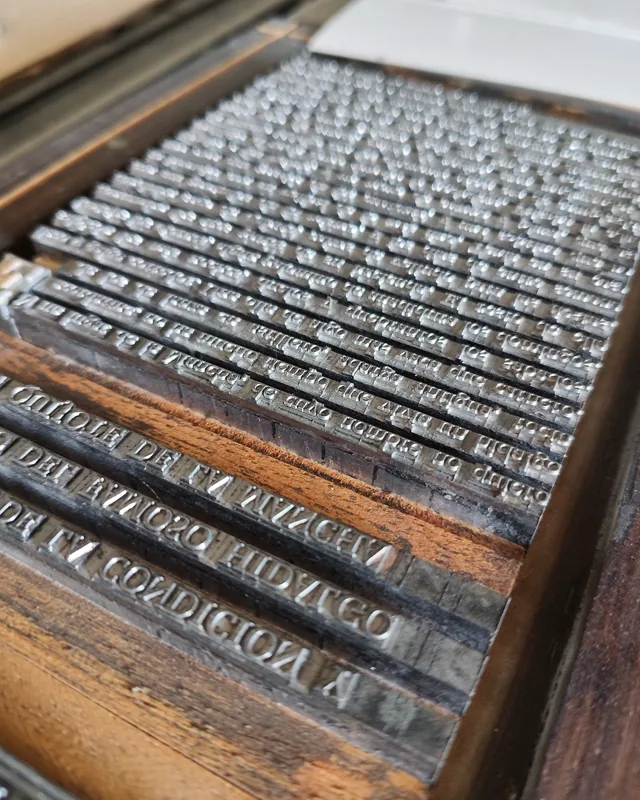
Why the year 1500
The date is a convention fixed by bibliographers of the 17th and 18th centuries, convenient and round. Nothing technical changed in 1501, but it serves to mark off the half century in which printing went from experiment to industry.
It is estimated that some thirty thousand different editions were printed in Europe in those fifty years. Many are entirely lost, of others a single copy survives.
How to recognise an incunable
The earliest printed books imitated the manuscript: they have no title page as we understand it, the title and printing details usually come at the end, in the colophon, and initials were left blank to be painted by hand. The text is set in gothic or early roman types and the illustrations, where there are any, are woodcuts.
The first two Olyven Books titles are illustrated incunabula: Brunschwig's Buch der Cirurgia, printed in Strasbourg in 1497, and the Herbarium Apulei, printed in Rome around 1481.
Incunable and facsimile
An original incunable is a heritage object, expensive and fragile. The facsimile lets you hold the same object, with its format and its images, without touching the copy kept in the library. When it is also printed with lead type and engraving, the experience comes very close to that of the reader of 1497.